Ever felt like you’re spending more time managing workflows than actually doing real work? Enter Azure Logic Apps — your go-to cloud service for automating complex processes without writing a single line of code. Let’s dive into how it transforms digital operations with ease and precision.
What Are Azure Logic Apps and Why They Matter

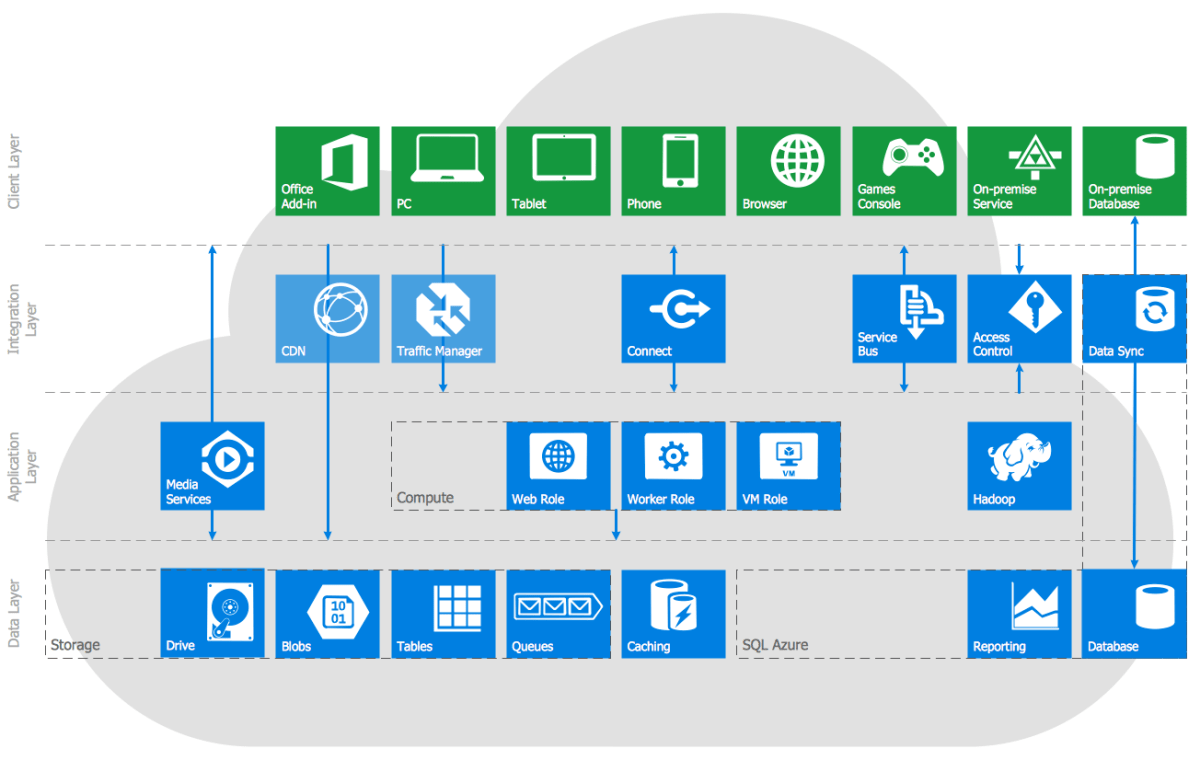
Azure Logic Apps is a cloud-based platform by Microsoft that enables users to automate repetitive tasks, integrate systems, and orchestrate workflows across multiple services — all with minimal coding. It’s part of the broader Azure Integration Services, working seamlessly with Azure Service Bus, API Management, and Functions.


Core Definition and Purpose
Azure Logic Apps allows businesses to design workflows using a visual designer, where each step in a process is represented as a ‘connector’ or ‘action’. These workflows can trigger based on events (like receiving an email or a new database entry) and execute a series of automated steps across cloud and on-premises systems.
- Designed for integration, automation, and orchestration.
- Supports both cloud-native and hybrid environments.
- Uses a declarative JSON-based workflow definition language.
“Logic Apps turns complex integrations into simple, manageable workflows.” — Microsoft Azure Documentation
How Azure Logic Apps Fit Into Modern Cloud Architecture
In today’s microservices-driven world, systems are fragmented across platforms. Azure Logic Apps acts as the glue that binds them together. Whether you’re connecting Salesforce to SQL Database or triggering an Azure Function upon a file upload in Blob Storage, Logic Apps handles the coordination.
It plays a crucial role in event-driven architectures, supporting triggers and actions that respond in real time. This makes it ideal for use cases like order processing, customer onboarding, and alert management.
Key Features That Make Azure Logic Apps a Game-Changer
Azure Logic Apps isn’t just another automation tool — it’s packed with features that make integration effortless, scalable, and secure. From hundreds of pre-built connectors to enterprise-grade monitoring, it’s built for both developers and business analysts.
Visual Workflow Designer
The drag-and-drop interface lets users build workflows without deep coding knowledge. You can add triggers, conditions, loops, and actions by simply selecting them from a menu.
- Intuitive interface reduces development time.
- Real-time validation helps prevent errors.
- Supports parallel execution and branching logic.
This designer is accessible via the Azure portal, making it easy for teams to collaborate and manage workflows centrally.
Rich Connector Ecosystem
One of the standout features of Azure Logic Apps is its vast library of over 300 built-in connectors. These include popular SaaS platforms like Microsoft 365, Salesforce, Dropbox, and Twitter, as well as Azure services like Storage, Event Grid, and Functions.
- Connectors handle authentication, data transformation, and error handling.
- On-premises data gateway enables secure access to local systems.
- Custom connectors can be built for proprietary APIs.
This eliminates the need to write boilerplate integration code, accelerating deployment timelines.
Built-In AI and Cognitive Services
Azure Logic Apps integrates with Azure Cognitive Services, allowing workflows to include AI-powered actions like sentiment analysis, image recognition, and text translation.
- Analyze customer feedback from emails automatically.
- Extract text from scanned documents using OCR.
- Detect inappropriate content in user-generated media.
These capabilities empower businesses to add intelligent decision-making into their automation flows without deep machine learning expertise.
How Azure Logic Apps Compare to Alternatives
While several tools offer workflow automation, Azure Logic Apps stands out in specific scenarios. Understanding how it compares to alternatives like Azure Functions, Power Automate, and third-party platforms like Zapier or MuleSoft is crucial for making the right architectural choice.
Logic Apps vs. Azure Functions
Both are part of Azure’s serverless offerings, but they serve different purposes. Azure Functions is code-first, ideal for running small pieces of logic (like processing a JSON payload), while Logic Apps is workflow-first, designed for orchestrating multi-step processes.
- Use Functions for high-frequency, lightweight tasks.
- Use Logic Apps for long-running, stateful workflows.
- They can be combined: a Logic App can trigger a Function as one of its steps.
Logic Apps also provides better monitoring and retry policies out of the box.
Logic Apps vs. Power Automate
Power Automate (formerly Microsoft Flow) is user-friendly and great for citizen developers. However, Logic Apps is more powerful and scalable, offering advanced features like enterprise integration packs (EIP), B2B protocols (AS2, X12), and better DevOps support.
- Power Automate: best for simple, department-level automations.
- Logic Apps: ideal for enterprise-grade, mission-critical integrations.
- Both share the same underlying connector framework.
If you need CI/CD pipelines, version control, or complex error handling, Logic Apps is the superior choice.
Logic Apps vs. Third-Party Tools (Zapier, MuleSoft)
Zapier is excellent for no-code automation between SaaS apps but lacks support for complex logic, custom code, or on-premises systems. MuleSoft offers robust integration capabilities but comes with higher costs and complexity.
- Logic Apps offers a balanced middle ground: powerful yet accessible.
- Better pricing model for high-volume workflows.
- Tighter integration with Azure ecosystem and security model.
For organizations already invested in Azure, Logic Apps provides the most seamless and cost-effective solution.
Real-World Use Cases of Azure Logic Apps
The true power of Azure Logic Apps becomes evident when applied to real business problems. From automating invoice processing to syncing data across platforms, the use cases are vast and impactful.
Automating Invoice Processing
Imagine receiving hundreds of vendor invoices via email every week. Manually extracting data and entering it into an ERP system is time-consuming and error-prone. With Azure Logic Apps, you can automate this entire process.
- Trigger: New email with attachment in Outlook.
- Action: Extract PDF content using Azure Form Recognizer.
- Action: Validate data and post to SAP or Dynamics 365.
- Action: Send confirmation email to the vendor.
This reduces processing time from days to minutes and improves accuracy.
Social Media Monitoring and Response
Brands need to monitor social media for customer inquiries, complaints, or mentions. Azure Logic Apps can listen to Twitter or Facebook for specific keywords and trigger appropriate responses.
- Trigger: New tweet containing your brand name.
- Action: Analyze sentiment using Text Analytics API.
- Condition: If negative, create a support ticket in ServiceNow.
- Condition: If positive, log in CRM and send a thank-you DM.
This ensures timely engagement and improves customer satisfaction.
Hybrid Data Synchronization
Many organizations still rely on on-premises databases while moving other operations to the cloud. Azure Logic Apps, combined with the on-premises data gateway, can sync data between SQL Server on-prem and Azure SQL Database.
- Trigger: New record in on-premises SQL table.
- Action: Fetch data via gateway.
- Action: Transform and insert into cloud database.
- Action: Notify team via Teams or email.
This enables a smooth transition to hybrid cloud without rewriting legacy systems.
Getting Started with Azure Logic Apps: A Step-by-Step Guide
Ready to build your first workflow? Here’s a practical guide to creating a simple but powerful automation using Azure Logic Apps.
Creating Your First Logic App
1. Log in to the Azure portal.
2. Click ‘Create a resource’ > Search for ‘Logic App’ > Select it.
3. Fill in basic details: name, subscription, resource group, location.
4. Choose the workflow type: ‘Consumption’ (serverless, pay-per-use) or ‘Standard’ (dedicated, supports code).
- For beginners, start with Consumption plan.
- Standard plan offers more control and is better for complex scenarios.
5. Click ‘Review + create’, then ‘Create’.
Designing a Simple Workflow
Once deployed, open the Logic App in the designer. Let’s create a workflow that sends an email when a new file is uploaded to Azure Blob Storage.
- Trigger: ‘When a blob is added or modified (properties only)’ from Azure Blob Storage connector.
- Action: ‘Get blob content’ to retrieve the file.
- Action: ‘Send an email (V2)’ using Outlook connector.
- Configure email subject and body with dynamic content from the blob.
Save the workflow. Now, every time a file is uploaded, an email will be sent automatically.
Testing and Monitoring Your Logic App
After saving, manually trigger the workflow by uploading a file to the specified container. Go to the ‘Run history’ tab to see execution details.
- Check for success or failure.
- View input and output data for each step.
- Use Azure Monitor and Application Insights for deeper telemetry.
Set up alerts for failed runs to ensure reliability.
Best Practices for Optimizing Azure Logic Apps
To get the most out of Azure Logic Apps, follow these proven best practices that enhance performance, maintainability, and security.
Use Managed Identities for Secure Authentication
Instead of storing credentials in connection strings, use Azure AD-managed identities. This eliminates secret management and improves security.
- Assign a system-assigned or user-assigned identity to your Logic App.
- Grant it permissions to access Azure resources like Storage or Key Vault.
- Use it in connectors that support Azure AD authentication.
This aligns with zero-trust security principles and reduces attack surface.
Implement Error Handling and Retry Policies
Not all actions succeed on the first try. Configure retry policies for each action to handle transient failures.
- Set retry intervals (default, exponential, fixed).
- Define maximum retry counts.
- Use the ‘Scope’ control to group actions and handle errors collectively.
Additionally, use the ‘Terminate’ action to stop workflows gracefully on critical failures.
Leverage DevOps for CI/CD Pipelines
Treat your Logic Apps as code. Store workflow definitions (JSON) in Git, and use Azure DevOps or GitHub Actions to deploy across environments.
- Use ARM templates or Bicep files for infrastructure as code.
- Parameterize connections for different environments.
- Run automated tests before deployment.
This ensures consistency, traceability, and faster rollbacks if needed.
Advanced Capabilities: Enterprise Integration and B2B Scenarios
Azure Logic Apps isn’t just for simple automations — it shines in complex enterprise integration scenarios, especially when dealing with legacy systems and B2B partners.
Using Enterprise Integration Pack (EIP)
The EIP extends Logic Apps with capabilities for handling EDI (Electronic Data Interchange), X12, AS2, and RosettaNet protocols — essential for industries like healthcare, retail, and logistics.
- Translate EDI messages to XML or JSON for internal systems.
- Sign and encrypt messages for secure B2B exchange.
- Validate message schemas and enforce business rules.
This eliminates the need for expensive middleware and simplifies partner onboarding.
Building Hybrid Integration Solutions
With the on-premises data gateway, Logic Apps can securely access databases, file shares, and LOB (Line-of-Business) apps behind firewalls.
- Install the gateway on a local machine.
- Register it with Azure.
- Use it in connectors like SQL Server, SharePoint, or IBM DB2.
This enables true hybrid integration without opening inbound ports or exposing systems to the internet.
Orchestrating Microservices and APIs
In a microservices architecture, a single user action may require calling multiple services. Logic Apps can act as the orchestrator, managing the sequence, error handling, and data transformation.
- Call REST APIs from different services.
- Aggregate responses into a single output.
- Implement circuit breakers and timeouts for resilience.
This reduces the burden on front-end applications and centralizes business logic.
Scaling and Cost Management in Azure Logic Apps
As your workflows grow, so do costs and performance demands. Understanding the pricing model and scaling options is essential for long-term success.
Understanding the Consumption vs. Standard Plan
Azure Logic Apps offers two hosting models:
- Consumption Plan: Pay-per-action model. Ideal for sporadic or unpredictable workloads. Scales automatically.
- Standard Plan: Runs on App Service plans. Offers better performance, VNET integration, and custom code support. Fixed monthly cost.
Choose Consumption for cost efficiency and Standard for control and scalability.
Monitoring and Optimizing Costs
Each action in a Logic App incurs a cost. To optimize:
- Minimize the number of actions by combining steps.
- Use filters early to avoid unnecessary processing.
- Monitor usage with Azure Cost Management.
- Set budgets and alerts.
For high-volume scenarios, the Standard plan may be more economical despite higher upfront cost.
Performance Tuning Tips
To ensure fast and reliable execution:
- Use asynchronous patterns where possible.
- Avoid long-running loops; consider using Azure Durable Functions instead.
- Cache frequently accessed data using Azure Redis Cache.
- Use parallel branches to speed up independent actions.
Regularly review run history to identify bottlenecks.
What are Azure Logic Apps used for?
Azure Logic Apps is used to automate workflows, integrate systems, and orchestrate business processes across cloud and on-premises environments. Common uses include data synchronization, alerting, invoice processing, and B2B communication.
Is Azure Logic Apps the same as Power Automate?
No. While both automate workflows, Power Automate is designed for end-users and simple tasks, whereas Azure Logic Apps is for developers and complex, enterprise-grade integrations with advanced features like DevOps, monitoring, and B2B protocols.
How much does Azure Logic Apps cost?
It depends on the plan. The Consumption plan charges per action (e.g., $0.000125 per action). The Standard plan is billed based on the App Service plan used. Costs vary based on usage, connectors, and execution frequency.
Can Logic Apps call Azure Functions?
Yes. Azure Logic Apps can trigger Azure Functions as actions within a workflow. This allows you to run custom code (C#, JavaScript, etc.) as part of your automation, combining the flexibility of code with the power of visual workflows.
How do I secure my Logic Apps?
Use managed identities, restrict access with Azure RBAC, enable private endpoints, store secrets in Azure Key Vault, and validate inputs to prevent injection attacks. Always follow the principle of least privilege.
Azure Logic Apps is more than just a workflow tool — it’s a powerful integration platform that bridges the gap between systems, data, and people. Whether you’re automating a simple email alert or orchestrating a global supply chain, Logic Apps provides the scalability, security, and flexibility needed to succeed. By leveraging its visual designer, rich connectors, and enterprise features, organizations can accelerate digital transformation without getting bogged down in complex coding. As cloud adoption grows, mastering Azure Logic Apps becomes not just an advantage — it’s a necessity.
Recommended for you 👇
Further Reading: