Looking for a powerful, scalable, and secure cloud database? Azure SQL Database delivers unmatched performance with zero infrastructure hassles. Discover why thousands of enterprises trust Microsoft’s cloud-native SQL solution.
What Is Azure SQL Database?

Azure SQL Database is Microsoft’s fully managed relational database service built on the Microsoft SQL Server engine, hosted in the cloud via Microsoft Azure. Unlike traditional on-premises databases, it eliminates the need for physical hardware, manual patching, and complex setup processes. Instead, it offers a streamlined, scalable, and intelligent database platform that automatically handles backups, updates, high availability, and security.


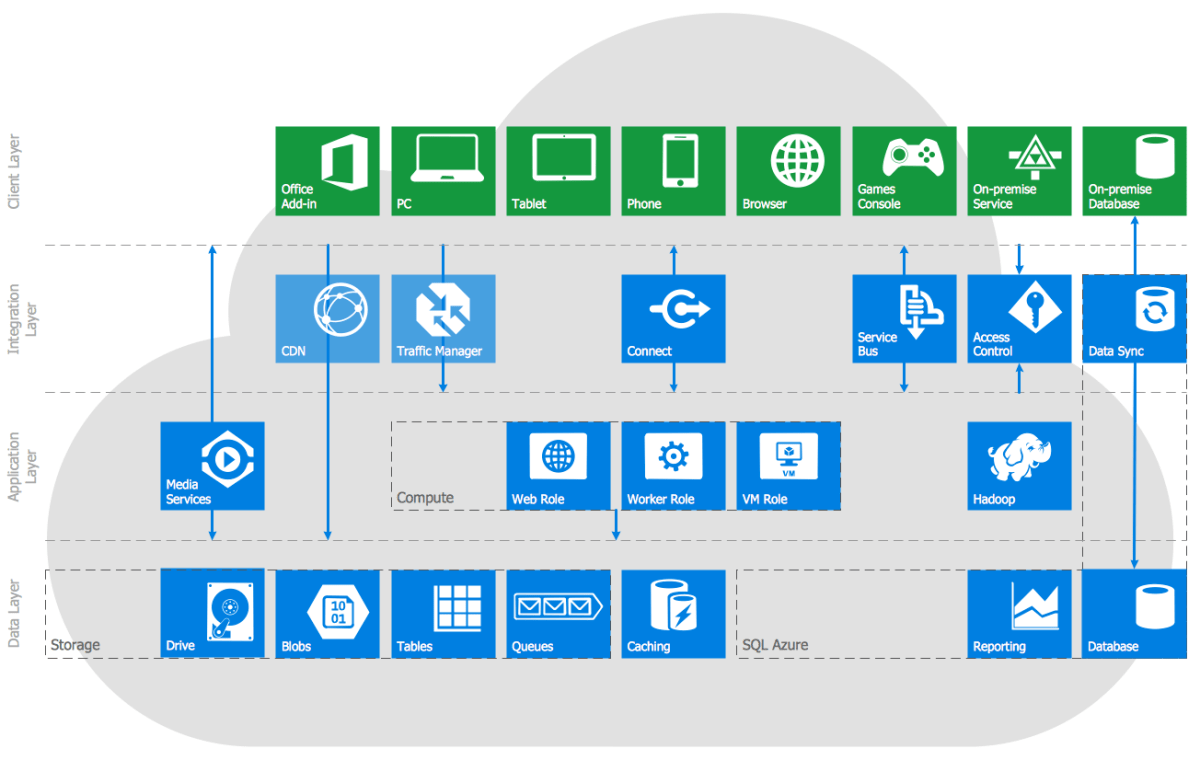
As a Platform-as-a-Service (PaaS) offering, Azure SQL Database allows developers and IT professionals to focus on application logic and data modeling rather than database administration. It supports the latest SQL Server features, including advanced querying, JSON support, machine learning integration, and in-memory technologies—all without requiring deep database management expertise.
Core Architecture and Cloud-Native Design
Azure SQL Database is designed from the ground up for the cloud. It runs on a distributed infrastructure managed by Microsoft, ensuring high availability through built-in redundancy across multiple data centers. The service uses a control plane and data plane architecture that separates management operations from data processing, enhancing both security and performance.
Each database instance is isolated and runs in a secure environment, with automatic failover capabilities that ensure uptime even during regional outages. The cloud-native design also enables seamless integration with other Azure services like Azure Active Directory, Azure Monitor, and Azure DevOps.
- Runs on Microsoft’s global network of data centers
- Uses intelligent query processing and adaptive indexing
- Supports multi-tenant and single-tenant deployment models
Differences Between Azure SQL Database and SQL Server
While both are based on the same SQL Server engine, Azure SQL Database and on-premises SQL Server differ significantly in management, scalability, and deployment. SQL Server requires manual installation, licensing, and ongoing maintenance, whereas Azure SQL Database is fully managed by Microsoft.
Key differences include:
- Management: Azure SQL Database automates patching, backups, and upgrades; SQL Server requires manual intervention.
- Scalability: Azure SQL Database scales elastically in seconds; SQL Server scaling often involves hardware upgrades.
- Cost: Azure SQL Database uses a pay-as-you-go model; SQL Server involves upfront licensing costs.
- High Availability: Built-in redundancy in Azure SQL Database vs. complex clustering setups in SQL Server.
For organizations migrating to the cloud, Azure SQL Database reduces operational overhead and accelerates time-to-market for data-driven applications.
“Azure SQL Database allows us to deploy mission-critical applications faster, with built-in intelligence and enterprise-grade security.” — Microsoft Azure Customer Case Study
Key Features of Azure SQL Database
Azure SQL Database stands out due to its rich set of features designed for modern application development and enterprise workloads. These features not only enhance performance but also simplify database management and improve security posture.
Intelligent Performance Optimization
One of the most powerful aspects of Azure SQL Database is its built-in intelligence. The service uses machine learning to monitor query performance and automatically recommend or apply optimizations. This includes index tuning, plan correction, and workload pattern analysis.
The Automatic Tuning feature can identify inefficient queries and suggest or implement fixes without human intervention. For example, if a query is missing an index, Azure SQL Database can create it automatically. Similarly, it can force optimal execution plans to prevent performance regressions.
- Automatic index creation and removal
- Query plan regression detection
- Real-time performance monitoring via Azure Monitor
This intelligence reduces the need for dedicated DBAs and ensures consistent performance even as workloads evolve.
Built-In High Availability and Disaster Recovery
Downtime is a major concern for businesses relying on databases. Azure SQL Database addresses this with multiple layers of redundancy and recovery options. Every database is replicated across at least three nodes within a region using Always On availability groups.
For disaster recovery, Azure offers geo-replication, allowing you to create up to four readable secondary databases in different Azure regions. In the event of a regional outage, you can fail over to a secondary region with minimal data loss (typically under 5 seconds).
- Local redundancy within a data center
- Zone redundancy across availability zones
- Geo-replication for cross-region failover
Additionally, Point-in-Time Restore (PITR) enables recovery to any second within the retention period (up to 35 days), protecting against accidental deletions or corruption.
Advanced Security and Compliance
Security is paramount in cloud databases, and Azure SQL Database delivers enterprise-grade protection. It includes features like Transparent Data Encryption (TDE), which encrypts data at rest, and Always Encrypted, which ensures sensitive data remains encrypted even during processing.
Threat detection is powered by Advanced Data Security, which monitors for anomalous activities such as SQL injection attempts or unusual access patterns. Alerts are sent directly to administrators via email or Azure Security Center.
- Dynamic data masking to hide sensitive info from non-privileged users
- Row-Level Security for fine-grained access control
- Integration with Azure Active Directory for centralized identity management
Azure SQL Database is compliant with major standards including GDPR, HIPAA, ISO 27001, and SOC 2, making it suitable for regulated industries like healthcare and finance.
Deployment Models: Single Database vs. Elastic Pool
Azure SQL Database offers two primary deployment models: Single Database and Elastic Pool. Choosing the right model depends on your workload, cost considerations, and performance requirements.
Single Database: Ideal for Isolated Workloads
The Single Database model is perfect for applications that require dedicated resources and predictable performance. Each database operates independently with its own compute, memory, and storage allocation.
This model is commonly used for:
- Production applications with stable workloads
- Development and testing environments
- Applications requiring strict performance SLAs
You can choose between two purchasing models: DTU-based (Database Transaction Units) or vCore-based. The vCore model offers more granular control over CPU, memory, and storage, making it ideal for performance-sensitive applications.
Learn more about pricing models at Azure SQL Database Pricing.
Elastic Pool: Cost-Efficient for Multiple Databases
If you manage multiple databases with variable workloads (e.g., SaaS applications with many tenants), Elastic Pools offer a smarter way to allocate resources. Instead of provisioning peak capacity for each database, you allocate a shared pool of resources (eDTUs or vCores) that databases can draw from as needed.
For example, during business hours, one database might spike in usage while others are idle. The elastic pool automatically redistributes resources to handle the load, ensuring performance without over-provisioning.
- Reduces costs by up to 70% compared to individual databases
- Supports automatic scaling based on demand
- Ideal for multi-tenant SaaS platforms
Elastic Pools also simplify management—apply updates, backups, and security policies across all databases in the pool simultaneously.
“Elastic Pools allowed us to consolidate 50+ customer databases while cutting costs by 60%.” — SaaS Startup CTO
Scalability and Performance Tuning
One of the biggest advantages of Azure SQL Database is its ability to scale seamlessly. Whether you’re handling a small web app or a large enterprise system, the platform adapts to your needs in real time.
Vertical and Horizontal Scaling Options
Azure SQL Database supports both vertical and horizontal scaling. Vertical scaling (scaling up/down) involves changing the compute tier of a database—e.g., moving from a General Purpose tier to a Business Critical tier for higher IOPS and lower latency.
This can be done with near-zero downtime, often in under a minute. For example, during a product launch, you can scale up to handle increased traffic and scale back down afterward to save costs.
Horizontal scaling is achieved through sharding or using hyperscale architecture. The Hyperscale service tier allows databases to grow up to 100 TB with fast scaling and near-instantaneous backups.
- Hyperscale enables read replicas for offloading reporting queries
- Auto-scaling based on CPU, memory, or DTU usage
- Support for up to 12 read replicas in Hyperscale
For more details on scaling options, visit Microsoft’s official scaling guide.
Performance Monitoring and Diagnostics
To maintain optimal performance, Azure SQL Database integrates with Azure Monitor and Query Performance Insight. These tools provide real-time visibility into CPU usage, data I/O, memory consumption, and blocking queries.
Query Performance Insight helps identify the most resource-intensive queries and suggests optimization strategies. You can drill down into execution plans, duration, and frequency to fine-tune performance.
- Set up alerts for CPU or memory thresholds
- Use Extended Events for deep diagnostics
- Export metrics to Log Analytics for advanced analysis
Additionally, the Performance Recommendations tab in the Azure portal provides actionable insights, such as creating missing indexes or updating statistics.
Integration with Azure Ecosystem
Azure SQL Database doesn’t exist in isolation—it’s deeply integrated with the broader Azure ecosystem, enabling seamless workflows across development, analytics, and AI services.
Seamless Connectivity with Azure Applications
Whether you’re building a web app with Azure App Service, a mobile backend with Azure Functions, or a microservices architecture using Azure Kubernetes Service (AKS), connecting to Azure SQL Database is straightforward.
Connection strings are automatically generated, and secure connectivity is enforced via Virtual Networks (VNet), private endpoints, and firewall rules. You can also use Azure Private Link to access the database over a private network, eliminating exposure to the public internet.
- Supports .NET, Java, Node.js, Python, and PHP applications
- Integration with Azure DevOps for CI/CD pipelines
- Automatic TLS encryption for all connections
This tight integration reduces configuration complexity and enhances security.
Data Analytics and AI with Synapse and Power BI
Azure SQL Database works seamlessly with Azure Synapse Analytics for large-scale data warehousing and analytics. You can offload analytical queries to Synapse without impacting transactional performance.
Additionally, Power BI can connect directly to Azure SQL Database for real-time dashboards and visualizations. This enables business users to gain insights without writing complex queries.
- Use PolyBase to query external data sources from SQL Database
- Enable change tracking for incremental data sync with data warehouses
- Leverage Azure Machine Learning for predictive analytics on SQL data
For developers, the integration with Azure Logic Apps and Event Grid allows event-driven architectures—e.g., triggering workflows when new data is inserted.
Migrating to Azure SQL Database
Migrating from on-premises SQL Server or other cloud databases to Azure SQL Database is a strategic move for many organizations. Microsoft provides robust tools to make this process smooth and risk-free.
Assessment and Readiness Check
Before migration, it’s crucial to assess your current database for compatibility. The Azure Database Migration Service (DMS) includes a built-in assessment tool that scans your SQL Server instance and identifies potential issues such as deprecated features, unsupported data types, or security configurations.
The assessment report provides recommendations for remediation, helping you prepare the database for a successful migration.
- Checks for compatibility with Azure SQL Database
- Estimates migration downtime
- Recommends appropriate service tier
Learn more at Azure Migration Guide.
Migration Tools and Strategies
There are several ways to migrate to Azure SQL Database:
- Backup and Restore: Restore a .bacpac file to Azure SQL Database (ideal for small databases).
- Database Migration Service: Perform online migrations with minimal downtime.
- Data Migration Assistant (DMA): A free tool for assessing and migrating databases.
For large-scale migrations, a hybrid approach using log shipping or replication may be used to synchronize data before cutover.
“We migrated 20 TB of data with zero downtime using Azure Database Migration Service.” — Enterprise IT Director
Cost Management and Pricing Models
Understanding the cost structure of Azure SQL Database is essential for budgeting and optimization. The service offers flexible pricing models to match different use cases.
DTU vs. vCore: Choosing the Right Model
The DTU model bundles compute, memory, and I/O into a single metric, making it simple for beginners. It’s available in three tiers: Basic, Standard, and Premium, each offering higher performance and availability.
The vCore model provides more transparency and control. You choose the number of vCores, amount of memory, and storage type (e.g., SSD). This model supports both General Purpose and Business Critical tiers and is preferred for production workloads.
- DTU: Best for predictable, small-to-medium workloads
- vCore: Ideal for large, performance-sensitive, or hybrid scenarios
- Serverless option available for intermittent workloads
The serverless tier automatically pauses the database during inactivity, reducing costs for dev/test environments.
Cost Optimization Best Practices
To avoid overspending, follow these best practices:
- Use Azure Cost Management to track spending and set budgets
- Scale down during off-peak hours (e.g., nights and weekends)
- Leverage reserved instances for long-term workloads (up to 48% savings)
- Monitor DTU/cpu utilization to right-size your database
Regularly review performance recommendations and remove unused databases to reduce costs.
Use Cases and Real-World Applications
Azure SQL Database is used across industries for a wide range of applications. Its flexibility and reliability make it suitable for both startups and Fortune 500 companies.
Web and Mobile Applications
Many modern web and mobile apps use Azure SQL Database as their backend. Its high availability and low-latency performance ensure smooth user experiences, even during traffic spikes.
- E-commerce platforms handling thousands of transactions per minute
- Social media apps with real-time data updates
- Mobile apps syncing data across devices
The integration with Azure App Service and Azure Mobile Apps simplifies deployment and scaling.
Enterprise Resource Planning (ERP) and CRM Systems
Companies use Azure SQL Database to host ERP and CRM systems like Dynamics 365. The database’s security, compliance, and integration with Power BI enable real-time reporting and analytics.
- Centralized data storage for finance, HR, and sales
- Role-based access control for sensitive data
- Automated backups for audit compliance
For more case studies, visit Azure Customer Stories.
Internet of Things (IoT) and Real-Time Analytics
In IoT scenarios, Azure SQL Database can store and process telemetry data from sensors and devices. When combined with Azure Stream Analytics, it enables real-time decision-making.
- Smart manufacturing systems monitoring equipment health
- Connected vehicles sending diagnostic data
- Retail stores analyzing customer behavior in real time
With support for JSON and spatial data, it’s well-suited for handling semi-structured and geospatial information.
What is Azure SQL Database?
Azure SQL Database is a fully managed Platform-as-a-Service (PaaS) relational database powered by the SQL Server engine, hosted in Microsoft Azure. It provides automated backups, patching, scaling, and security, making it ideal for cloud-native applications.
How much does Azure SQL Database cost?
Pricing depends on the service tier (DTU or vCore), compute size, and storage. Costs range from a few dollars per month for small databases to thousands for large, high-performance systems. The serverless tier can reduce costs for intermittent workloads.
Can I migrate my on-premises SQL Server to Azure SQL Database?
Yes, Microsoft provides tools like Data Migration Assistant and Azure Database Migration Service to assess, migrate, and validate databases with minimal downtime.
Is Azure SQL Database secure?
Yes, it includes Transparent Data Encryption, Advanced Threat Protection, Dynamic Data Masking, and integration with Azure Active Directory. It complies with major regulatory standards like GDPR and HIPAA.
What is the difference between Azure SQL Database and Azure SQL Managed Instance?
Azure SQL Database is a fully managed PaaS with limited access to instance-level features, while Azure SQL Managed Instance offers near 100% compatibility with on-premises SQL Server, including support for SQL Agent, cross-database queries, and distributed transactions.
Choosing Azure SQL Database means embracing a future-proof, intelligent, and secure data platform. With its automatic management, elastic scalability, and deep Azure integration, it empowers organizations to innovate faster and operate more efficiently. Whether you’re building a new app or modernizing legacy systems, Azure SQL Database delivers the performance and reliability you need—without the complexity.
Recommended for you 👇
Further Reading: